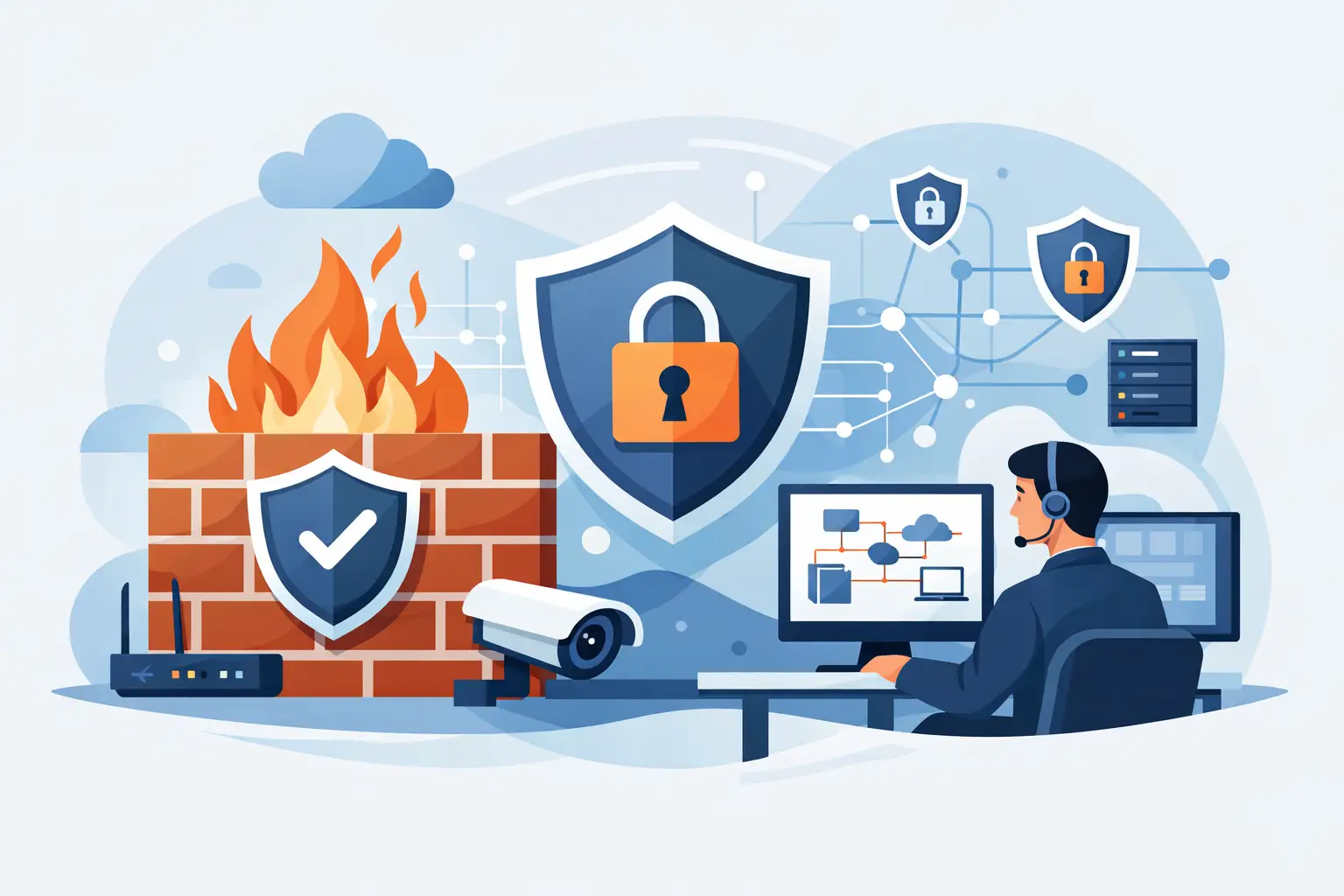
A firewall that nobody checks until something breaks is not much of a security strategy. For many businesses, that is exactly the problem. The hardware may be in place, but rules go outdated, alerts get ignored, and no one has clear ownership. If you are asking what is a managed firewall, the short answer is this: it is a firewall service that is configured, monitored, maintained, and supported by a specialized IT or security provider rather than being left entirely to your internal team.
That definition matters because most firewall problems are not caused by the box itself. They come from missed updates, weak policies, incomplete visibility, and slow response when something suspicious happens. A managed firewall addresses those gaps by pairing the technology with ongoing expertise.
What is a managed firewall and how does it work?
A managed firewall is a firewall solution delivered with active administration. That usually includes initial setup, policy design, rule changes, firmware updates, log review, performance monitoring, and incident response support. Depending on the provider and the environment, it may also include around-the-clock monitoring, reporting, VPN management, intrusion prevention, content filtering, and coordination with broader cybersecurity controls.
In practical terms, the firewall still sits at the edge of your network, in your cloud environment, or between key systems. It inspects traffic entering and leaving your business and enforces the rules that define what should be allowed, blocked, inspected, or flagged. The difference is that a managed service provider takes responsibility for keeping those controls aligned with how your business actually operates.
That is an important distinction for growing organizations. Security policies are not static. A new office, a cloud migration, remote staff, a vendor integration, or a compliance requirement can all change what the firewall needs to do. Managed firewall service keeps that layer current instead of treating it as a one-time deployment.
What a managed firewall typically includes
The exact scope varies, but most business-grade managed firewall services go well beyond device installation. A provider usually starts by assessing your network, applications, users, and risk profile. From there, they build policies that support business operations without leaving unnecessary exposure.
Ongoing service commonly includes continuous monitoring for suspicious activity, software and firmware updates, rule optimization, backup and recovery of firewall configurations, and support when changes are needed. Reporting is also a major part of the value. Business leaders and IT managers need visibility into blocked threats, usage trends, attempted intrusions, and overall network health.
Some services are fully managed, meaning the provider owns day-to-day administration. Others are co-managed, where internal IT retains control over certain decisions while the provider handles monitoring, maintenance, and escalation support. For small to mid-sized businesses, co-managed arrangements can be a smart fit because they extend internal capabilities without forcing a complete handoff.
Why businesses choose managed firewall services
The main reason is simple: a firewall only works as well as it is managed. Many organizations have capable people internally, but those teams are stretched across user support, cloud platforms, vendors, devices, backups, and business applications. Firewall administration ends up becoming reactive.
A managed firewall service helps reduce that risk by putting accountability around one of the most important parts of your security stack. Instead of hoping someone notices a threat or remembers a firmware update, you have a process and a partner focused on uptime, protection, and response.
There is also an operational benefit. Firewall policies affect business performance. Misconfigured rules can slow applications, interrupt remote access, block legitimate traffic, or leave blind spots between offices and cloud systems. Good management is not just about blocking attacks. It is about maintaining secure, reliable connectivity that supports day-to-day work.
For regulated industries, the value goes even further. Audit readiness, documented controls, and policy consistency matter when you face compliance requirements. A managed approach helps create cleaner records and more disciplined change control.
Managed firewall vs. traditional firewall ownership
A traditional firewall setup usually means your business buys the appliance or virtual firewall, installs it, and manages it internally. That can work well if you have security-focused staff, clear operational processes, and enough time to stay on top of updates and threat activity.
The challenge is that many businesses do not have those resources in-house on a consistent basis. Even strong IT teams may not have deep firewall expertise across every vendor platform, advanced feature set, or emerging threat pattern. In those environments, unmanaged or lightly managed firewalls tend to drift. Rules accumulate, exceptions stay in place too long, and alert fatigue sets in.
A managed firewall shifts the model from ownership alone to ownership plus accountability. You are not just paying for equipment. You are paying for disciplined administration, faster issue resolution, and stronger alignment between security controls and business needs.
That said, it is not a one-size-fits-all answer. If your company has a mature security operations function, in-house management may be perfectly reasonable. For most small and midsize organizations, though, managed service is often the more practical and cost-effective path.
What a managed firewall does not do
A managed firewall is a critical security control, but it is not the whole security program. It will not replace endpoint protection, identity security, security awareness training, vulnerability management, or backup and disaster recovery. It also cannot fix weak internal processes or eliminate every cyber risk.
This is where expectations matter. A firewall can control and inspect network traffic. It can help stop unauthorized access, malicious connections, and suspicious behavior at the perimeter and between environments. But if an employee gives away credentials or a compromised device connects through an approved channel, other layers still need to do their job.
The best results come when managed firewall service is part of a broader security strategy. That includes network design, endpoint defense, patching, email security, access controls, and ongoing support from a provider that understands how those pieces fit together.
Signs your business may need a managed firewall
If firewall changes are handled only when someone complains, that is a warning sign. The same is true if no one can quickly explain which rules are in place, when they were last reviewed, or how alerts are escalated. Businesses also tend to benefit from managed service when they are adding locations, supporting remote teams, moving systems to the cloud, or facing growing compliance pressure.
Another common sign is vendor sprawl. If one company manages internet service, another handles cybersecurity tools, and internal staff are left coordinating network issues in the middle, response becomes slow and fragmented. A managed firewall works best when it is part of a more coordinated infrastructure and security approach.
For organizations that cannot justify a full internal security team but still need enterprise-grade protection, this service fills a very real gap.
How to evaluate a managed firewall provider
Not all providers manage firewalls at the same level. Some handle only basic monitoring and ticket-based changes. Others deliver deeper security oversight, strategic guidance, and integration with the rest of your environment. It is worth asking how often rules are reviewed, how alerts are triaged, what response times look like, and whether reporting is written for technical staff, leadership, or both.
You should also look at business fit, not just technical capability. A good provider understands uptime requirements, remote access needs, cloud traffic patterns, and the realities of your operation. They should be able to explain trade-offs clearly. For example, tighter controls can improve security, but they may require more planning around application access, third-party connectivity, and user workflows.
That consultative approach matters. The right partner will not just block traffic. They will help you make sound decisions about risk, usability, and growth. For businesses that want one accountable technology partner across infrastructure, cybersecurity, and support, that broader alignment can make a significant difference.
The business value behind managed firewall service
When people ask what is a managed firewall, they are often really asking a different question: does this reduce risk without creating more complexity? In a well-run environment, the answer is yes. It gives your business stronger control over network traffic, more consistent maintenance, better visibility into threats, and less dependence on already-stretched internal resources.
It also supports the bigger goals that matter to leadership teams – fewer disruptions, more predictable performance, stronger compliance posture, and clearer accountability when issues arise. Those are not abstract IT benefits. They directly affect productivity, customer trust, and the cost of downtime.
For many organizations, especially those balancing growth with limited in-house bandwidth, a managed firewall is less about buying another security tool and more about putting the right ownership around a critical system. That is often the difference between having protection on paper and having protection that holds up when the pressure is real.
If your firewall is supposed to protect the business, it should be managed like the business depends on it.