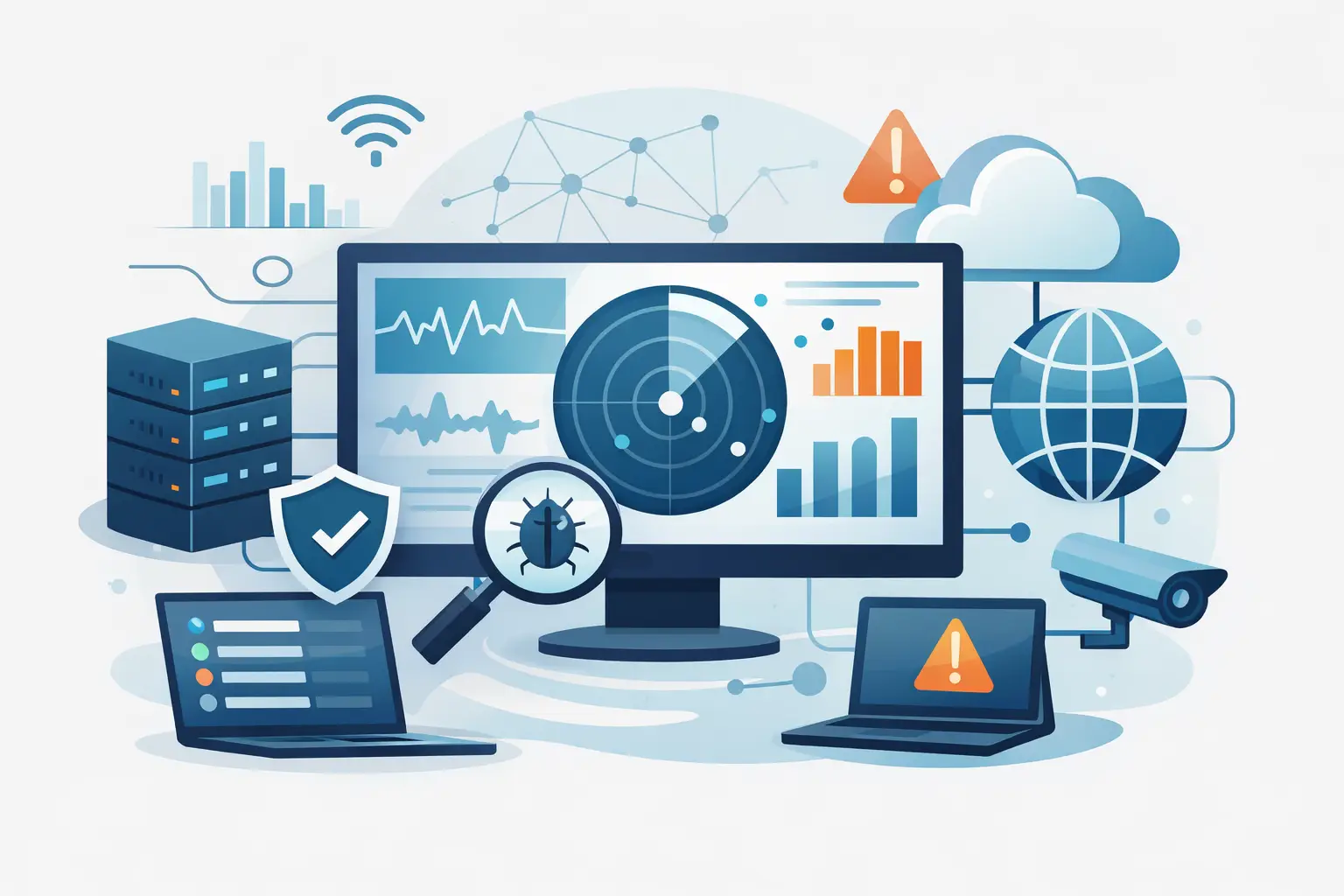
When a network slows down at 10:15 on a Tuesday, most employees do not report that “the switch in closet B is dropping packets” or “bandwidth is being saturated by backup traffic.” They say the phones sound bad, files will not open, the ERP system keeps freezing, or the internet is down again. That is why the question, what does network monitoring do, matters to business leaders. It connects technical signals to real operational impact before small issues turn into lost productivity, frustrated customers, or security exposure.
At its core, network monitoring watches the health, performance, and availability of the systems that keep your business connected. That includes routers, switches, firewalls, wireless access points, internet circuits, VPN connections, servers, and often the key services that depend on them. The goal is not to collect data for its own sake. The goal is to maintain uptime, catch problems early, and give your IT team or managed services partner the visibility needed to act quickly.
What does network monitoring do in a business environment?
Network monitoring continuously checks whether critical infrastructure is up, how well it is performing, and whether anything is behaving outside expected thresholds. It measures things like bandwidth use, device status, latency, packet loss, error rates, link availability, and hardware health. If something changes, the system generates alerts so someone can investigate before users feel the full effect.
In practical terms, that means network monitoring can show that a branch office circuit is flapping, a firewall is running out of resources, a core switch port is throwing errors, or a wireless access point is overloaded. Those are not abstract technical details. They are often the hidden reasons behind dropped calls, slow applications, failed logins, and intermittent outages.
This visibility matters even more in growing organizations. As more cloud applications, remote users, connected devices, and security controls depend on the network, the margin for guessing gets smaller. When there is no monitoring in place, teams usually find out about problems only after employees start calling the help desk or operations begin to stall.
Network monitoring is early warning, not just outage detection
A common misconception is that network monitoring only tells you when the internet is down. Good monitoring does much more than that. It helps identify degrading conditions before they become a full outage.
For example, a circuit may still be technically online while latency climbs high enough to disrupt voice traffic. A switch may still pass traffic while its CPU spikes and performance becomes inconsistent. A wireless environment may still function while interference and overuse make meetings, scanning devices, or cloud access unreliable. Monitoring catches those warning signs earlier than end-user complaints typically do.
That early warning has real business value. It shortens troubleshooting time, reduces downtime, and makes IT support more proactive. Instead of reacting to vague reports like “the network is acting weird,” your team can start with evidence, isolate the likely cause, and resolve the issue faster.
What network monitoring looks at
A business network has multiple layers, and monitoring should account for more than a single internet connection. At a minimum, it usually includes device availability, interface health, bandwidth usage, hardware performance, and alerting for failures or unusual behavior.
In many environments, it also tracks WAN links between locations, VPN stability for remote users, wireless coverage and client load, and the availability of business-critical services. If your operations depend heavily on cloud applications, monitoring may extend to how reliably users are reaching those services from your network edge.
The depth of monitoring should fit the business. A small office with one location and a handful of cloud tools may need a more focused setup than a multi-site manufacturer, healthcare practice, or professional services firm with compliance pressure and around-the-clock operations. More monitoring is not always better if it creates noise. The right monitoring strategy balances broad visibility with useful, actionable alerts.
Performance, security, and accountability
One of the most valuable things network monitoring does is create accountability around performance. Without it, network conversations can become guesswork. Is the problem the ISP, the firewall, the application, the Wi-Fi, or the user’s device? Monitoring gives your team timestamps, trends, and context.
That historical view is especially useful when issues are intermittent. If a location reports random slowdowns every afternoon, monitoring may reveal a consistent bandwidth spike tied to backup jobs, camera uploads, or a scheduled sync process. If remote users complain about unstable VPN access, monitoring can show whether the problem starts at the firewall, the ISP handoff, or upstream internet conditions.
Monitoring also supports security, though it is not the same thing as a full cybersecurity program. It can reveal unusual traffic patterns, repeated failures, device status changes, and connectivity anomalies that may indicate risk. If a firewall interface suddenly spikes with unexpected outbound traffic, or a device goes offline and reappears in a strange pattern, monitoring can help flag that behavior for review.
That said, network monitoring is one part of a broader protection strategy. It works best alongside endpoint protection, firewall management, patching, access controls, backups, and security monitoring. Businesses sometimes assume one tool covers everything. It does not. But when network monitoring is done well, it becomes an important signal source for both operations and security.
Why businesses struggle without it
When organizations do not have proper monitoring, they usually operate in a reactive mode. Problems are discovered by employees, customers, or leadership after the disruption has already started. IT teams then spend valuable time trying to reproduce symptoms, gather logs, and determine whether the issue is isolated or widespread.
That delay has a cost. Productivity drops. Internal confidence in IT erodes. Customer-facing systems may become unreliable. If a business has multiple vendors for internet, phones, cybersecurity, and infrastructure, the lack of centralized monitoring can make finger-pointing even worse.
For small and mid-sized businesses, this is often where the gap appears. They may have good equipment but limited internal staff to watch it consistently. Or they may have grown quickly, adding sites, cloud apps, security controls, and hybrid work requirements without building the operational discipline needed to support that complexity. Monitoring helps close that gap by turning infrastructure from a black box into something measurable and manageable.
What does network monitoring do for planning and growth?
Network monitoring is not only about fixing problems. It also helps with planning. Over time, usage data shows whether bandwidth is sufficient, whether certain links are under strain, whether hardware is aging out, and whether traffic patterns are changing as the business grows.
That information supports better decisions. Instead of replacing equipment based on guesswork, you can see whether a firewall is consistently nearing capacity or whether a switch stack is carrying more load than it was designed for. Instead of overbuying internet circuits, you can compare actual demand against peak periods and application needs.
This is where a strategic IT partner adds value. Data without interpretation can still leave business leaders with more questions than answers. The real advantage comes from translating monitoring insights into action – adjusting configurations, improving redundancy, right-sizing infrastructure, and aligning the environment with business goals.
At Plasma Networks, that is how monitoring should function: not as passive reporting, but as part of a broader commitment to uptime, performance, and business continuity.
Monitoring works best when someone owns the response
A final point often gets overlooked. Monitoring by itself does not solve anything. Alerts only matter if the right people receive them, understand their priority, and have a process to respond.
That is why the operational model matters as much as the tool. Some businesses want internal IT to receive and manage alerts directly. Others prefer a managed or co-managed approach where an outside partner watches the environment, investigates issues, and coordinates remediation. The best fit depends on your internal capacity, risk tolerance, hours of operation, and technical complexity.
What matters most is that monitoring leads to action. If alerts are ignored, thresholds are poorly tuned, or no one is accountable after hours, even a sophisticated monitoring platform can become background noise.
A healthy network rarely gets noticed, and that is the point. The value of network monitoring is not in flashy dashboards. It is in quieter mornings, fewer surprises, faster answers, and an infrastructure foundation your business can actually rely on.