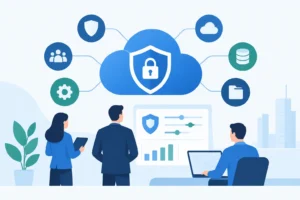
A workstation shortage, expired firewall license, or delayed internet circuit can stop productive work long before it appears on a financial report. That is why IT procurement services for business should be treated as an operational function, not a series of isolated purchases. The right approach gives leaders control over cost, security, compatibility, and timing while keeping employees equipped to do their work.
For small and mid-sized organizations, procurement becomes more difficult as technology expands. Hardware, cloud subscriptions, collaboration tools, connectivity, physical security, and cybersecurity controls often come from different vendors with different renewal dates. Without a coordinated plan, teams end up reacting to urgent requests, paying for duplicate services, and carrying avoidable risk.
What Business IT Procurement Should Accomplish
Effective procurement is not about finding the lowest unit price. A low-cost device that cannot run required applications, lacks warranty coverage, or creates additional support work can become the more expensive choice within months. Business procurement should connect every technology purchase to a clear operational outcome.
That includes selecting equipment that fits the organization’s environment, verifying that software licensing matches actual usage, and planning for implementation before an item arrives. It also means considering how a purchase affects security. A new laptop, camera system, wireless access point, or cloud application can introduce exposure if it is not configured, monitored, and supported correctly.
A sound procurement process should answer practical questions early: Will this solution work with the existing network? Who owns the contract and renewal? What happens when the equipment fails? Does the vendor meet security and compliance expectations? Can the solution scale when the business adds locations, employees, or new services?
When those questions are answered before a purchase order is approved, technology becomes easier to support and less likely to interrupt operations.
Why Fragmented Purchasing Creates Risk
Many organizations begin with ad hoc purchasing because it feels fast. A department orders devices independently, an employee signs up for a software trial with a company card, or a manager replaces equipment after it fails. Each decision may appear reasonable on its own. Over time, however, the result is a technology environment with limited visibility and inconsistent standards.
Fragmentation commonly produces unsupported devices, overlapping software subscriptions, unmanaged user accounts, and unclear warranty records. It can also complicate incident response. If leadership does not know which systems are in use, where business data is stored, or who has administrative access, a security event takes longer to contain.
There is also a financial impact. Emergency orders usually carry less favorable pricing and shipping options. Teams may renew contracts they no longer need simply because no one has a complete view of the renewal calendar. Internal staff then spend time resolving compatibility problems that could have been avoided through standardization.
The goal is not to centralize every small purchase to the point that employees cannot work. It is to establish the right level of oversight based on risk, spend, and business impact. A replacement keyboard does not need the same review as a firewall, internet connection, or company-wide software platform.
IT Procurement Services for Business Connect Strategy and Delivery
Professional IT procurement services for business bring technical review and purchasing discipline into the same process. Instead of asking a buyer to evaluate technical specifications alone, the organization gains guidance from people who understand the network, security requirements, user needs, and support implications.
This model is particularly valuable when a company does not maintain a large internal IT department. A strategic technology partner can help define standards for computers, servers, network equipment, cloud services, voice systems, and security tools. Standardization reduces the number of variables that support teams must manage and creates a more predictable experience for users.
Procurement support also improves project planning. For example, an office move may require internet service, structured cabling, wireless coverage, conference room equipment, access control, and endpoint deployment. Ordering these items separately without a coordinated timeline can delay opening day. When procurement is aligned with project delivery, dependencies are identified early and implementation can proceed in the correct sequence.
The best fit depends on the organization. A company with experienced internal IT leadership may need co-managed procurement support, vendor sourcing, and lifecycle reporting. A growing business with limited technical resources may benefit from a fully managed model that includes recommendations, ordering, deployment, documentation, and ongoing support.
Start With Standards, Not Individual Requests
The most reliable procurement programs begin with approved technology standards. These standards do not need to be overly restrictive. They should define the preferred options for common needs, such as employee laptops, monitors, mobile devices, network switches, wireless equipment, backup solutions, and security software.
Standards make budgeting easier because leaders know the typical cost of equipping a new employee or opening a new location. They also strengthen security by ensuring devices can receive updates, support encryption, and work with endpoint protection tools. From a support perspective, standard configurations reduce troubleshooting time and simplify spare equipment planning.
Technology standards should be reviewed regularly. A model that was appropriate two years ago may no longer meet performance needs or manufacturer support requirements. The review should account for changing workforce patterns, new applications, supply availability, and evolving cybersecurity expectations.
Manage the Full Lifecycle
Procurement does not end when equipment is delivered. The lifecycle starts with planning and includes configuration, deployment, maintenance, renewal, replacement, and secure retirement. Missing any of these stages can create unnecessary expense or risk.
A practical lifecycle plan tracks purchase dates, warranties, software subscriptions, assigned users, and expected replacement windows. This allows businesses to replace equipment before failures become disruptive rather than waiting for an emergency. It also helps finance teams spread costs across a planned schedule instead of absorbing a large, unexpected refresh.
Secure retirement deserves the same attention as acquisition. Devices may contain customer information, employee records, saved credentials, or company files. Before a laptop, server, mobile device, or storage system leaves the business, data should be removed using an appropriate documented process. Licenses and user access should also be reviewed so the company is not paying for accounts tied to former employees or retired systems.
Evaluate Vendors Beyond Price
Vendor relationships influence both the quality of the solution and the speed of resolution when problems occur. Price matters, but it should sit alongside availability, warranty terms, replacement options, support responsiveness, and technical fit.
For critical systems, businesses should understand lead times and alternatives before an urgent need arises. Supply constraints can affect everything from laptops to network hardware. A procurement partner with established distributor and manufacturer relationships can often identify compatible options faster, but the business should still confirm that substitutions meet its security and performance requirements.
Software purchases require similar care. Licensing structures can change, and a platform that appears inexpensive at entry level may become costly as users, storage, or feature needs grow. Review the total expected cost, contract term, data ownership, administrative controls, and exit considerations before committing to a new service.
Create Clear Accountability
A dependable procurement process has defined ownership. Business leaders should know who can approve purchases, who validates technical requirements, who manages vendor contracts, and who maintains asset and renewal records. These responsibilities can be handled internally, externally, or through a shared model, but they should not be assumed.
For many organizations, the most effective structure combines business approval with technical oversight. Department leaders explain the operational need, finance confirms budget parameters, and IT verifies compatibility, security, and lifecycle impact. This avoids both uncontrolled spending and unnecessary delays.
Plasma Networks helps businesses bring these decisions together across infrastructure, cybersecurity, connectivity, communications, and physical security. That unified perspective matters when one technology decision affects several parts of the environment.
Make Procurement a Source of Operational Stability
The strongest procurement programs are measured by more than savings on a quote. They reduce last-minute purchases, limit unsupported technology, improve user productivity, and make growth easier to plan. They also give leadership a clearer view of where technology dollars are going and what risks need attention next.
Start with an inventory of current devices, subscriptions, contracts, and renewal dates. Then identify the systems that create the greatest disruption if they fail or expire. Building a practical procurement plan around those priorities gives the business a steadier path forward, one purchase, renewal, and technology refresh at a time.