A flat network can work for a while – right up until one infected laptop, misconfigured device, or unauthorized user gets access to far more than they should. That is usually when business leaders start asking, what is network segmentation, and why wasn’t it part of the environment from the start?
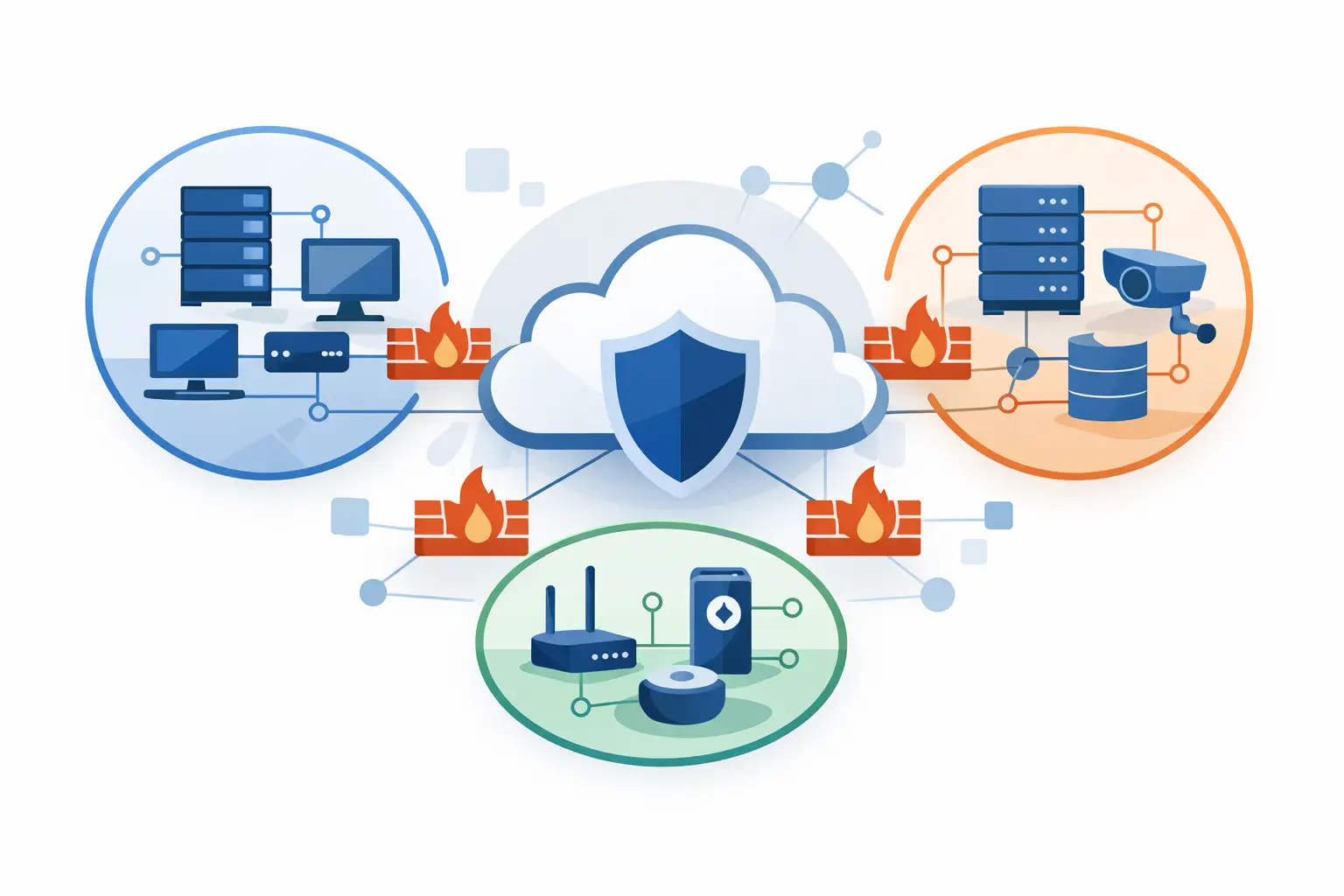
Network segmentation is the practice of dividing a network into smaller, controlled sections so users, devices, applications, and systems only have access to the resources they actually need. Instead of letting everything communicate freely across the same environment, segmentation places boundaries between parts of the business. Those boundaries improve security, reduce unnecessary traffic, and give IT teams better control over how systems operate.
For small and mid-sized businesses, this is not just an enterprise security concept. It is a practical way to reduce risk, support compliance requirements, and keep day-to-day operations stable as the organization grows.
What Is Network Segmentation?
At its core, network segmentation separates one business network into multiple logical or physical zones. Each zone can be built around a function, department, security level, device type, or business system. For example, a company might separate office workstations from VoIP phones, guest Wi-Fi, security cameras, servers, and finance systems.
The goal is simple. If one part of the network has a problem, that problem should not automatically spread everywhere else.
Think about a typical business environment. Employees use laptops, printers, cloud applications, file servers, wireless access points, mobile devices, cameras, badge readers, and communication systems. Some of those assets handle sensitive information. Some need internet access only. Some should never talk directly to one another. Segmentation helps enforce those distinctions instead of relying on everyone and everything to behave perfectly.
This separation can happen through VLANs, subnets, firewalls, access control lists, software-defined controls, or a combination of methods. The exact design depends on the size of the business, the sensitivity of its data, and how much internal IT support is available.
Why Network Segmentation Matters for Business Operations
Security is usually the first reason companies look at segmentation, and for good reason. If ransomware reaches one endpoint on a flat network, it can often move laterally to file shares, servers, backup systems, and other devices. Segmentation limits that movement. It does not guarantee a breach cannot happen, but it can make the damage far smaller and much easier to contain.
There is also a performance benefit. Not every system needs to broadcast traffic across the same space. Separating high-volume or specialized devices can reduce congestion and make troubleshooting faster. Voice systems, surveillance devices, and business-critical applications often perform better when they are not competing with every other device on the network.
Control is another major advantage. A segmented network lets IT teams define who can access what, when, and from where. That matters for organizations with remote users, multiple departments, compliance obligations, or a mix of company-owned and personal devices. It also supports more disciplined change management because the network is organized with intention rather than left to expand loosely over time.
How Network Segmentation Works in Practice
A useful way to understand segmentation is to think in terms of trust levels. Not every user or system should be trusted equally.
A finance server that stores payroll or banking data belongs in a more restricted segment than a break-room smart TV. Guest Wi-Fi should be isolated from internal business systems. Security cameras and door access systems often need to communicate with specific management platforms, but they should not have broad access to user workstations or sensitive file repositories.
In practice, a business might create segments for employee devices, servers, voice traffic, IoT devices, guest access, and line-of-business applications. Traffic between those segments can then be allowed, limited, or blocked based on policy. For example, users may be allowed to reach a file server but not a camera network. A printer may accept jobs from employee systems but have no reason to initiate communication to accounting servers.
This is where segmentation becomes more than a network diagram. It becomes an operating model for security and reliability.
What Is Network Segmentation vs. a Flat Network?
In a flat network, most devices can communicate freely with one another because they sit on the same logical network with minimal internal barriers. Flat networks are simpler to set up initially, and for a very small office they may seem adequate. The trade-off is that simplicity can create broad exposure.
If a user clicks a malicious link, if a device is poorly secured, or if an outside party gains access through a forgotten system, a flat network gives that threat room to move. Troubleshooting can also become more difficult because there is less structure around traffic flow and access patterns.
A segmented network introduces order. It makes businesses think deliberately about which systems belong together and which do not. That design work takes more planning upfront, but it usually pays off in better resilience, stronger security posture, and cleaner long-term growth.
Common Examples of Network Segmentation
Most businesses do not need dozens of highly specialized segments on day one. They do need a thoughtful structure that reflects operational risk.
A common starting point is separating guest wireless from internal business traffic. From there, many organizations isolate servers from end-user devices, place voice systems on their own segment, and separate IoT or physical security devices such as cameras, alarm systems, and access control hardware. Businesses in regulated industries may also isolate systems that handle protected or financial data.
Manufacturing, healthcare, legal, and multi-site environments often benefit from deeper segmentation because downtime and unauthorized access carry higher operational consequences. But even a smaller office can gain value by creating a few well-defined boundaries instead of leaving everything connected by default.
The Trade-Offs to Consider
Network segmentation is valuable, but it is not a set-it-and-forget-it project. Good segmentation requires planning, documentation, and ongoing oversight.
If the design is too loose, it may not provide meaningful protection. If it is too restrictive, users and applications can run into access issues that affect productivity. That is why business goals matter. The right question is not simply how many segments to create. It is how to separate systems in a way that protects operations without making the environment hard to manage.
There is also a cost consideration. Some environments need upgraded switching, firewall capacity, policy design, monitoring, and testing to support effective segmentation. For many organizations, that investment is justified because the cost of a security event or prolonged outage is much higher. Still, the approach should match the size and complexity of the business.
When a Business Should Revisit Its Network Design
If your organization has added remote users, cloud applications, security cameras, smart devices, or multiple locations over the past few years, there is a good chance the network has evolved faster than its structure. That is common. Businesses grow, new tools are added, and the original network design starts carrying more responsibility than it was built for.
Warning signs include recurring performance issues, unclear device visibility, growing compliance pressure, shared access that feels too broad, or security concerns around legacy systems and unmanaged endpoints. Segmentation will not solve every infrastructure problem, but it often becomes a foundational step toward a more stable and defensible environment.
For businesses that do not have a large internal IT team, this is where working with an experienced partner can make the difference between a clean, scalable design and a project that creates more confusion than control. Plasma Networks regularly helps organizations align network architecture with business continuity, security requirements, and future growth.
Building a Smarter Network Over Time
The strongest network designs are rarely the most complicated. They are the ones built with clear intent. Segmenting a network gives businesses a practical way to contain risk, improve visibility, and support better system performance without depending on one broad, unrestricted environment.
If you are asking what is network segmentation, the real business question is whether your current network still reflects how your organization operates today. When the answer is no, creating the right boundaries can be one of the most effective steps you take to protect uptime and keep growth from introducing unnecessary risk.