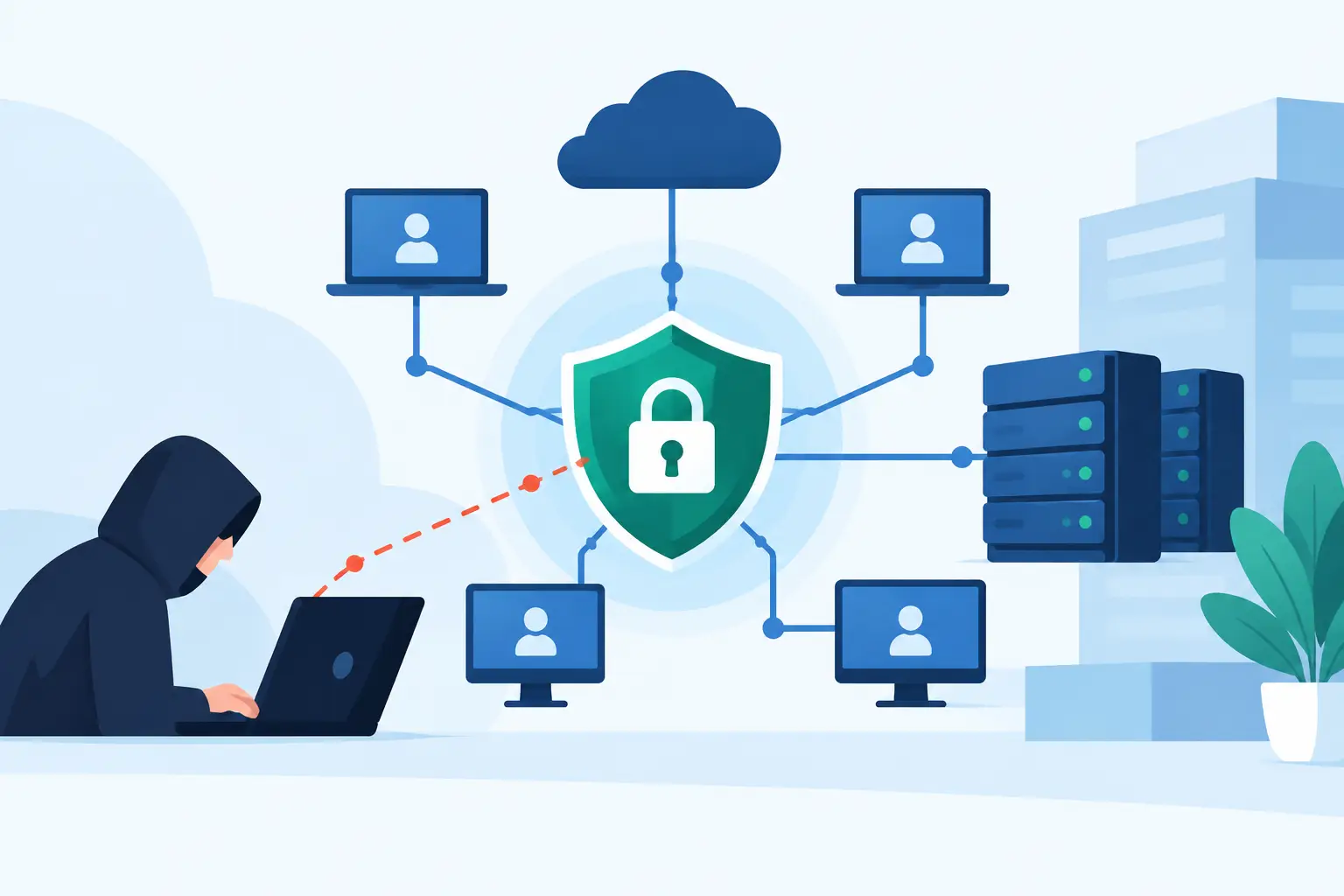
A firewall can be configured correctly and still leave a path into the business. A remote access portal may require passwords but lack multifactor authentication. An overlooked server, wireless network, or vendor connection can create the opening an attacker needs. Network penetration testing puts those assumptions to the test before a real threat actor does.
For small and mid-sized organizations, the goal is not simply to receive a list of technical findings. It is to understand where the business is exposed, which issues could interrupt operations or compromise sensitive data, and what should be corrected first. Done properly, a penetration test produces practical direction for improving security without losing sight of uptime, budget, and operational priorities.
What Network Penetration Testing Actually Tests
Network penetration testing is an authorized security assessment that simulates the techniques an attacker could use to identify and exploit weaknesses in a network environment. The assessment may include internet-facing systems, internal networks, wireless access, remote connectivity, cloud-connected resources, and segmentation between sensitive systems.
The distinction between a vulnerability scan and a penetration test matters. A scan uses automated tools to identify known weaknesses, missing patches, insecure configurations, and exposed services. It is an efficient way to find a broad range of issues, but it does not always show whether a finding can be used to gain access or move deeper into the environment.
A penetration test combines tools with experienced human analysis. The tester validates whether identified weaknesses are exploitable, examines how systems interact, and assesses the likely business impact. For example, a test may show that a low-priority configuration issue can be chained with weak credentials and inadequate network segmentation to reach financial data or a critical server.
That context helps leadership avoid two common mistakes: treating every finding as equally urgent or dismissing a technical issue that appears minor on its own.
Why Businesses Need More Than a Vulnerability Scan
Many organizations already use endpoint protection, firewalls, Microsoft 365 security controls, and patch management. These are necessary layers of defense, but they do not prove that the layers work together as intended. Security tools can be present while policies are incomplete, exceptions accumulate, or changes introduce gaps over time.
A penetration test evaluates the environment from an attacker’s perspective. It can answer questions such as whether an exposed device can be reached from the internet, whether a compromised user account could access systems outside its role, or whether an unauthorized visitor could join the wireless network and find sensitive resources.
This testing is particularly valuable after a significant change. A new office, merger, cloud migration, firewall replacement, remote-work initiative, line-of-business application, or new vendor integration can alter the security posture quickly. Testing after these changes helps verify that speed and convenience did not create a route around established safeguards.
Compliance can also drive the need for testing. Requirements vary by industry and contract, but organizations in healthcare, finance, manufacturing, legal services, and other regulated environments often need documented evidence that they assess and remediate security risk. Even where a formal requirement does not apply, customers and insurers increasingly ask pointed questions about cybersecurity controls and independent testing.
External, Internal, and Wireless Testing
The right scope depends on how the organization operates and what it needs to protect. An external test focuses on what is visible from outside the network. This commonly includes public IP addresses, remote access services, web applications, email infrastructure, and cloud-hosted systems. It identifies the opportunities available to an attacker who has no prior access.
An internal test begins from within the environment, simulating a compromised workstation, malicious insider, or visitor who gains physical or wireless access. Internal testing often reveals whether network segmentation, identity controls, and endpoint protections prevent a local compromise from becoming a larger incident.
Wireless testing evaluates the security of corporate Wi-Fi, guest networks, and access-point configuration. The concern is not only weak wireless encryption. A guest network that can communicate with internal systems, an improperly configured access point, or a poorly controlled onboarding process can introduce material risk.
A mature assessment may include all three, but not every business needs the same level of testing at the same time. A company with highly distributed employees and cloud applications may prioritize external access and identity controls. A manufacturer or medical office with on-site systems may need deeper internal and wireless testing. The scope should follow business risk, not a generic checklist.
What a Well-Run Engagement Looks Like
Penetration testing should never be an uncontrolled attempt to break into business systems. It starts with clear authorization, a documented scope, defined testing windows, and agreed rules of engagement. Those rules establish what systems may be tested, what methods are prohibited, which contacts must be notified, and how critical findings will be handled.
The discovery phase identifies the systems, services, and potential entry points in scope. Testers then assess weaknesses, validate safe exploitation where appropriate, and determine whether access could be expanded. Careful testing avoids unnecessary disruption. The objective is to demonstrate risk, not to interrupt production or create avoidable downtime.
Communication is essential throughout the engagement. If a high-risk exposure is identified, the business should not have to wait for a final report to hear about it. Critical findings should be escalated promptly so the organization can contain the issue, remove exposure, or apply a compensating control.
The final report should be understandable to both technical teams and leadership. It should explain the finding, affected systems, evidence of impact, risk level, and recommended remediation. It should also distinguish between urgent corrective actions and longer-term improvements. A report filled with raw scan output may look comprehensive, but it does not provide the decision-ready guidance most businesses need.
Common Findings That Create Real Risk
The details differ from one environment to another, yet several issues appear repeatedly. Unsupported systems and delayed patches remain common because business-critical applications can make updates difficult. Weak or reused credentials can turn one compromised account into broad network access. Missing multifactor authentication on remote access and administrative accounts raises the stakes considerably.
Flat networks are another frequent concern. When workstations, servers, backup systems, cameras, guest devices, and operational technology share overly broad access, an attacker can move more freely after an initial compromise. Segmentation limits that movement and gives security teams more time to detect and contain an incident.
Exposed administrative services, misconfigured firewalls, insecure legacy protocols, excessive user privileges, and poorly secured wireless networks can also create attack paths. None of these findings should be evaluated in isolation. A business may accept a lower-risk issue temporarily if it has compensating controls, but it should understand how that decision affects the wider environment.
Turning Findings Into Security Improvements
The report is the beginning of the value, not the finish line. Remediation should be organized around risk, operational impact, and feasibility. Critical exposures that could enable unauthorized access, ransomware spread, or data theft require immediate attention. High-risk issues should receive a defined owner and target date. Lower-risk improvements can be incorporated into planned maintenance, refresh cycles, or larger infrastructure projects.
Some fixes are straightforward: patch a device, close an unnecessary service, remove an unused account, or enforce multifactor authentication. Others require planning. Network segmentation, identity redesign, hardware replacement, and application modernization can affect workflows, vendor support, and capital budgets. A dependable technology partner helps translate security recommendations into a practical implementation plan rather than handing over findings and leaving the internal team to sort through them.
Retesting is valuable once critical remediation is complete. It verifies that the correction works as intended and that no related path remains open. This gives executives, customers, auditors, and cyber insurance stakeholders stronger evidence that the organization addressed the issue.
How Often Should Testing Occur?
Annual testing is a sensible baseline for many businesses, particularly those that handle sensitive data, maintain internet-facing services, or operate under contractual and regulatory expectations. Higher-risk organizations may benefit from more frequent testing, especially when their environment changes rapidly.
The calendar should not be the only trigger. Testing is also warranted after a security incident, a major network redesign, a new remote access platform, an acquisition, or a substantial cloud migration. If the organization has introduced a new way to connect users, vendors, sites, or systems, it has likely introduced new assumptions worth validating.
Plasma Networks approaches security as an operating discipline tied to the systems that keep a business running. Penetration testing is most effective when it supports ongoing patching, identity management, monitoring, backup protection, network design, and user awareness, rather than serving as a once-a-year compliance exercise.
The most useful next step is to identify the systems your business could not afford to lose access to for a day, then confirm that the network protections around them have been tested under realistic conditions. That conversation turns cybersecurity from a vague concern into a clear plan for protecting operations.