A ransomware alert at 2:13 a.m. does not care whether your internal IT team starts at 8. For many businesses, that gap is where the real risk lives. Managed detection and response services are built to close it by giving organizations continuous threat monitoring, investigation, and containment support that most small and mid-sized companies cannot staff on their own.
For business leaders, the appeal is straightforward. You need stronger cybersecurity, faster incident response, and less operational strain on internal teams. What you do not need is another security tool that sends alerts no one has time to review. That is where MDR becomes different from a stack of software licenses.
What managed detection and response services actually do
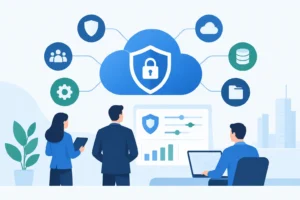
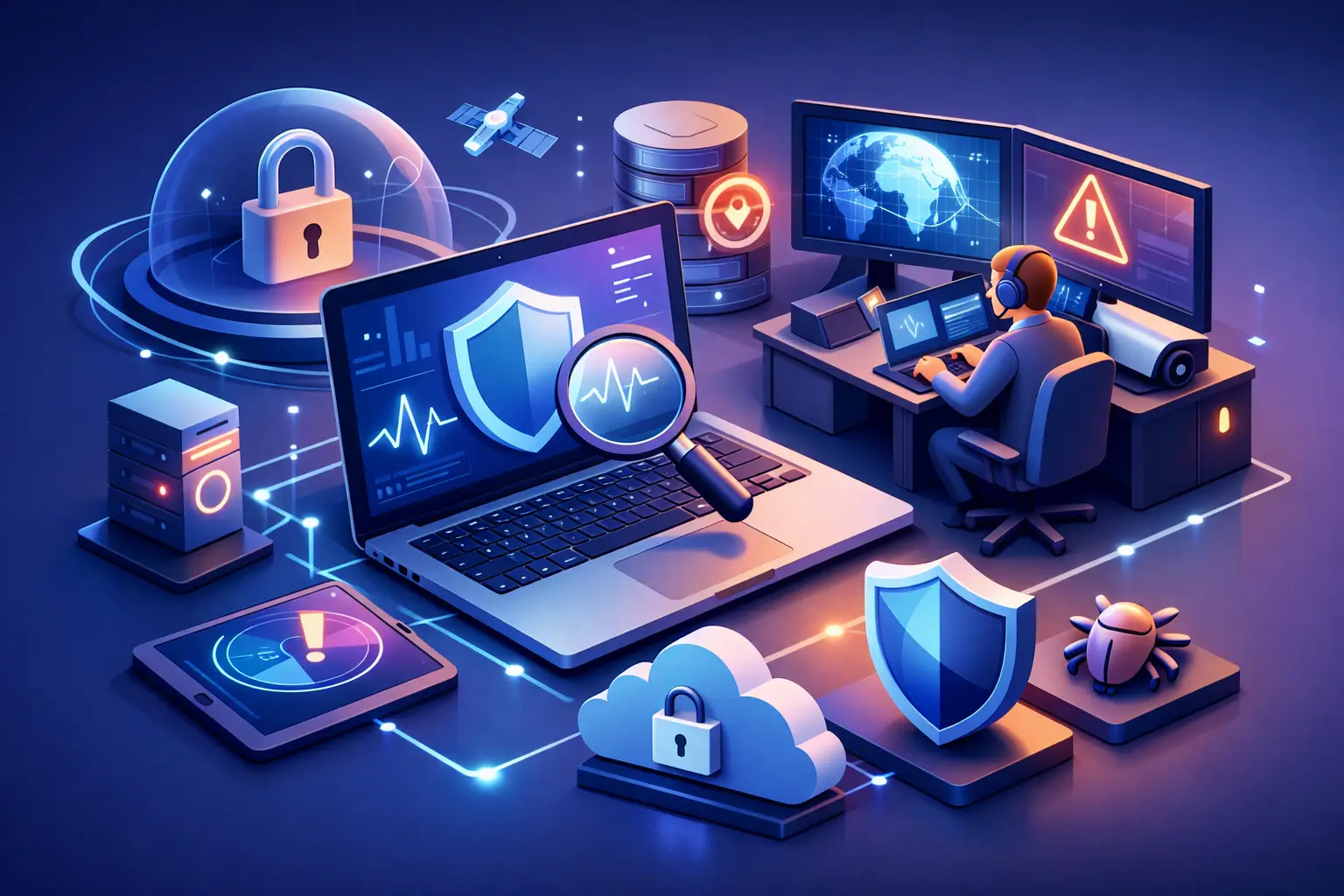
Managed detection and response services combine security technology with human expertise. Instead of simply generating notifications, an MDR provider monitors your environment, analyzes suspicious activity, investigates potential threats, and helps contain incidents before they spread.
That sounds simple, but the difference is significant. Many businesses already own antivirus, endpoint tools, firewalls, or email filtering. The problem is not always a lack of tools. The problem is often a lack of visibility, context, and 24/7 response capacity. Security alerts come in constantly, and without a team dedicated to sorting signal from noise, critical events can be missed.
A strong MDR service typically watches endpoint activity, user behavior, login anomalies, lateral movement, privilege escalation, suspicious scripts, and signs of ransomware or data exfiltration. It also connects those signals into a clearer picture of what is happening across your environment. That context matters because a failed login by itself may be nothing, while a failed login followed by unusual access patterns and file encryption attempts is a very different story.
Why businesses are turning to managed detection and response services
The main driver is not fear. It is practicality. Cybersecurity has become too complex and too continuous for many organizations to manage with a lean IT department and a handful of disconnected tools.
Small and mid-sized businesses are especially exposed here. They often support hybrid work, cloud platforms, mobile devices, third-party applications, and compliance requirements with limited internal headcount. At the same time, attackers are not ignoring them. Many threat actors prefer organizations that have valuable data but less mature defenses.
Managed detection and response services help close that gap without forcing a company to build a full security operations center from scratch. That means around-the-clock coverage, access to trained analysts, and faster action when something suspicious appears.
There is also a business continuity angle that matters just as much as security. When an attack disrupts operations, the damage is rarely limited to IT. It affects scheduling, customer communication, billing, inventory, production, and trust. Faster detection and containment can reduce downtime, limit spread, and keep a security event from becoming a full operational crisis.
MDR versus traditional managed security monitoring
Not every monitored security service delivers the same value. Some offerings are heavy on alerting and light on response. They may send reports, escalate tickets, or recommend next steps, but leave your team to do the hard part under pressure.
MDR is stronger when it moves beyond observation. The response component is the real differentiator. Depending on the provider and service model, that may include isolating endpoints, disabling compromised accounts, guiding internal teams through containment, or coordinating remediation steps in real time.
This is also where business leaders need to read carefully. One provider may define response as email notification. Another may include active containment support. That difference affects outcomes when minutes matter.
What to expect from a good MDR partner
A dependable MDR provider should give you more than technical coverage. It should provide operational clarity. You should know what is being monitored, how incidents are triaged, when your team will be contacted, and what actions the provider can take on your behalf.
Visibility is important, but so is accountability. If your business already works with a managed IT partner, co-managed support model, or internal IT leader, MDR should strengthen that structure rather than complicate it. The right partner integrates into existing workflows, reduces noise, and helps your team focus on business priorities instead of chasing every security event.
Good MDR also depends on tuning. A generic service that treats every business the same can create frustration fast. A healthcare practice, manufacturer, law firm, and multi-location office do not face identical risks or operate with the same tolerance for disruption. Effective monitoring needs to reflect your environment, users, systems, and response requirements.
Where MDR fits in your overall security strategy
Managed detection and response services are not a replacement for every other cybersecurity control. They work best as part of a larger security program that includes endpoint protection, patching, identity controls, backups, email security, firewall management, user awareness, and documented response procedures.
That distinction matters because some businesses buy MDR expecting it to compensate for neglected basics. It can improve detection and response significantly, but it cannot erase the risks created by outdated systems, weak passwords, poor access control, or missing backups.
The better way to think about MDR is as a force multiplier. It makes your existing security investments more effective by adding monitoring, analysis, and response discipline around them. For organizations with limited internal security staff, that can be the difference between owning tools and actually getting protection from them.
Signs your organization may need MDR
You likely have a strong case for MDR if your IT team is already stretched, if security alerts go unreviewed after hours, or if you depend on a mix of cloud and on-premises systems without centralized visibility. The same is true if compliance pressure is increasing, if remote access has expanded, or if leadership expects stronger cyber readiness without adding internal headcount.
Another common sign is tool fatigue. Many businesses have invested in security products over time but still feel uncertain about their ability to detect and stop an active threat. That uncertainty usually points to an operations gap, not just a technology gap.
If your current approach relies heavily on reacting after users report something strange, your detection model is probably too late. By then, an attacker may already have moved deeper into the environment.
How to evaluate managed detection and response services
Start with response scope. Ask what the provider will actually do during an incident, what requires your approval, and how quickly actions can be taken. Then look at coverage hours, escalation paths, reporting quality, and whether the service is built for your size and operational complexity.
It is also worth asking how the provider reduces false positives. Too much noise creates complacency, and complacency is dangerous. You want a team that can interpret data accurately, not just pass along every alert that crosses a threshold.
Integration is another key factor. MDR should work cleanly with your existing endpoints, cloud services, firewall stack, and IT operations. If it creates a new silo, it will add friction when you need alignment most.
For many organizations, the best fit is a partner that can connect cybersecurity with broader managed IT, network performance, and business continuity planning. Security incidents do not happen in isolation. They affect systems, users, communications, and uptime all at once. A provider that understands that full picture can usually respond more effectively.
That is one reason companies often prefer a unified partner such as Plasma Networks rather than juggling separate vendors for infrastructure, support, and security. Fewer handoffs usually mean faster action and clearer accountability.
The trade-offs to keep in mind
MDR is not a magic fix, and it is not identical across providers. Some services are highly hands-on, while others remain advisory. Some are designed for mature IT environments, while others fit businesses that need more guidance and operational support.
Cost is also part of the equation. MDR adds expense compared with basic endpoint protection alone. But that comparison can be misleading. The real comparison is between MDR and the cost of delayed detection, extended downtime, internal resource strain, and incident recovery. For most growing businesses, building equivalent in-house capability would be far more expensive.
There is also a trust factor. You are giving an outside partner visibility into critical systems and, in some cases, authority to act during incidents. That requires clear communication, well-defined procedures, and confidence in the provider’s judgment.
Why MDR matters more as businesses grow
Growth increases exposure. More employees, more devices, more locations, more cloud apps, and more vendors create more entry points and more complexity. Security can no longer rely on ad hoc oversight or occasional reviews.
Managed detection and response services give growing organizations a way to scale protection without waiting until they can justify a full internal security team. They provide the kind of coverage that supports uptime, resilience, and operational confidence while leadership focuses on running the business.
The right time to evaluate MDR is usually before you feel fully ready for it. If your business depends on connected systems to serve customers, process transactions, and keep operations moving, faster detection and decisive response are no longer optional extras. They are part of staying in business with fewer interruptions and fewer surprises.
A good technology partner should make security feel more controlled, not more complicated, and that is exactly where MDR delivers the most value.