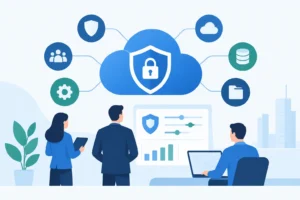
A remote employee opens a project file from a home network. A sales manager checks customer data from an airport. A branch office connects to cloud-based applications all day. Each action creates a question that business leaders can no longer treat as a simple remote-access decision: is the network security model designed for where work actually happens?
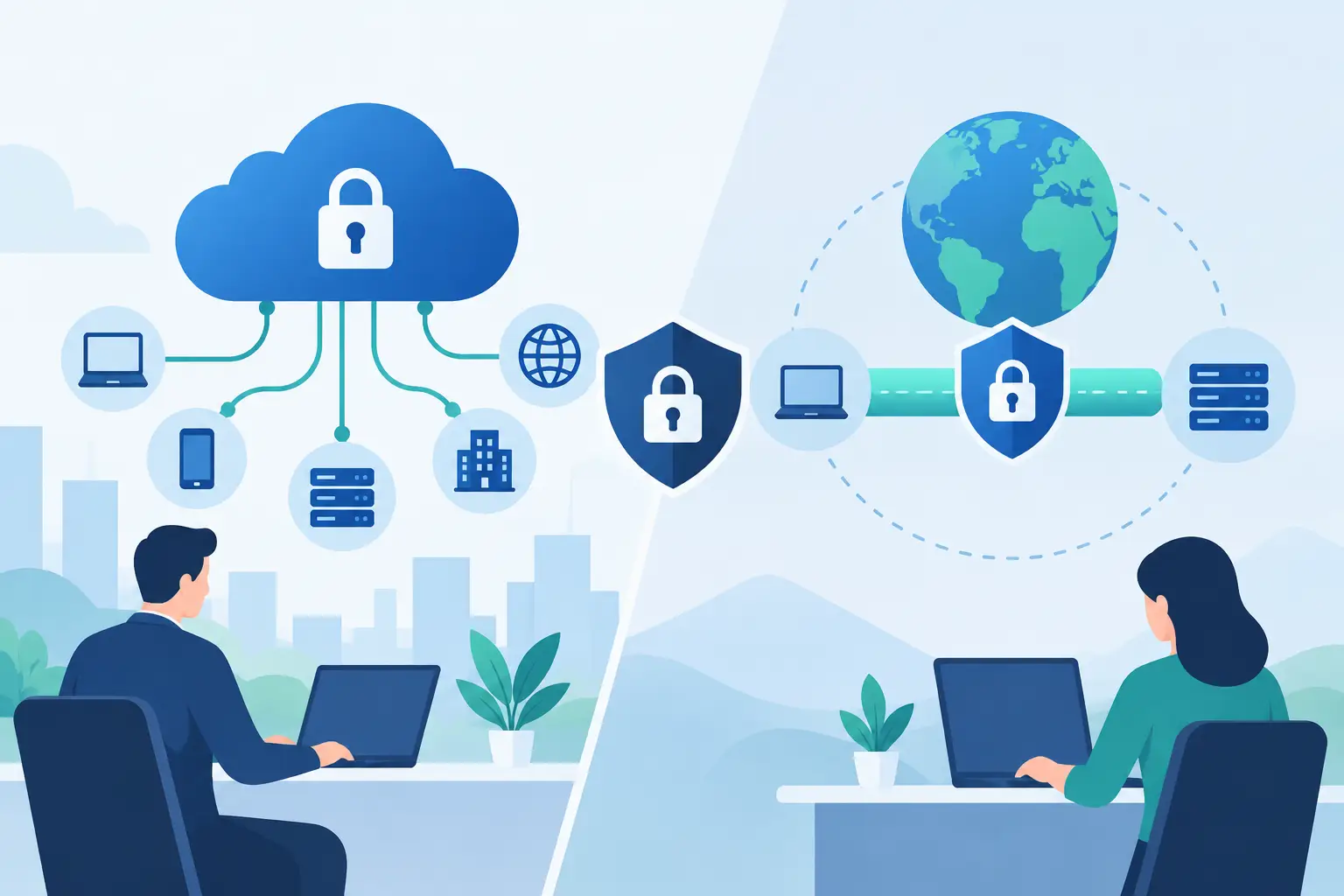
That is the practical issue behind SASE versus VPN. Both technologies can connect users to business resources, but they were built around different assumptions. A virtual private network, or VPN, extends a private network to remote users. Secure Access Service Edge, or SASE, applies security and access controls through a cloud-delivered platform that follows the user, device, and application.
For a growing business, the right choice is not about choosing the newest acronym. It is about protecting data, maintaining performance, reducing operational strain, and giving employees dependable access without creating unnecessary risk.
What a VPN Does Well
A VPN creates an encrypted tunnel between a user or location and the company network. It is a familiar, proven approach for allowing remote employees to access internal systems, shared drives, line-of-business applications, and resources that are not available on the public internet.
For many organizations, especially those with a central office and a limited remote workforce, a VPN remains a sensible part of the environment. It can be cost-effective, straightforward to deploy, and well suited to specific use cases such as administrators accessing internal infrastructure or employees connecting to an on-premises application.
The challenge is that traditional VPN design often assumes the corporate network is the center of work. Once a user connects, they may receive broad network-level access. Security teams must then rely on additional controls to limit what that user can reach and to identify suspicious activity after the connection is established.
VPN traffic can also create performance issues. In a common configuration, a remote user sends all traffic through the company data center or headquarters before reaching a cloud application. This is known as backhauling. It can add latency, consume bandwidth, and make a cloud-based application feel slower than it should.
These limitations do not mean every VPN should be removed. They mean the business should be clear about what the VPN is protecting, who needs access, and whether its architecture still matches the way people work.
SASE Versus VPN: The Core Difference
SASE combines networking and security services in a cloud-delivered model. Instead of treating the corporate network as the trusted center, SASE evaluates access based on identity, device condition, location, application, and security policy.
A SASE platform commonly brings together secure web gateway capabilities, firewall-as-a-service, zero trust network access, cloud access security controls, and data protection policies. The exact services vary by provider, but the operating principle remains the same: users receive access to the specific applications and resources they need, rather than broad access to an entire network.
This distinction matters when employees use Microsoft 365, cloud file-sharing platforms, software-as-a-service applications, and internet-based business tools from many locations. Traffic can be inspected and secured closer to the user, then routed directly to the intended service rather than forced through a central office.
A VPN answers the question, “Can this user join the private network?” SASE is better positioned to ask, “Should this user, on this device, under these conditions, access this particular application or data?”
That more granular approach supports zero trust security. Zero trust does not mean trusting nobody or making work difficult. It means continuously verifying access instead of assuming that an authenticated connection should receive broad privileges.
Where SASE Delivers Business Value
SASE is often most valuable for organizations with distributed teams, multiple offices, significant cloud adoption, or elevated compliance and cybersecurity concerns. It can improve consistency because the same security policies apply whether an employee works from Cleveland, a customer site, a home office, or a branch location.
For example, a company may allow an accounting employee to access its financial platform but prevent that employee from uploading sensitive reports to an unauthorized cloud storage service. A VPN can provide the connection, but SASE provides a more complete framework for controlling and monitoring how data moves once the user is working.
SASE can also reduce dependence on appliances at each location. As businesses open offices, support hybrid work, or expand through acquisition, deploying and maintaining separate perimeter security systems everywhere can become expensive and difficult to standardize. A cloud-managed security model can simplify policy management while giving IT teams clearer visibility into users, devices, applications, and network activity.
Performance is another consideration. When users access cloud applications directly through secure cloud points of presence, they may experience fewer delays than they would with traffic routed through headquarters. Results depend on the provider, the user’s internet connection, and application design, but reducing unnecessary backhauling can improve the employee experience.
Trade-Offs to Consider Before Moving to SASE
SASE is not automatically the best answer for every organization. It requires planning, policy design, identity management, and ongoing oversight. If access rules are poorly defined, a new platform can reproduce old security gaps in a more complicated form.
Cost deserves a careful look as well. A basic VPN may have lower immediate costs, particularly if the business already owns compatible firewall equipment and has a small number of remote users. SASE is typically subscription-based and may involve licensing by user, device, bandwidth, or service level. The comparison should include more than monthly fees. Consider the cost of managing hardware, maintaining multiple security tools, responding to incidents, supporting remote users, and upgrading aging infrastructure.
Some legacy applications may also require special attention. An older internal application that depends on broad network access, fixed IP addresses, or unusual protocols may not transition cleanly to a zero trust access model. In those cases, a phased design can protect critical operations while modernization work proceeds.
Internet reliability remains essential, too. Because SASE is cloud-delivered, each location needs dependable connectivity and appropriate redundancy for business-critical functions. A strong security architecture cannot compensate for a single, unreliable internet circuit at a site that must remain operational.
When a VPN Is Still the Right Fit
A VPN may remain appropriate when remote access needs are limited and clearly defined, the organization relies heavily on on-premises resources, and the existing security stack is well managed. It can also serve specialized technical use cases, including controlled administrative access to systems that should not be exposed through broader user-facing tools.
The key is to avoid treating VPN access as a blanket permission. Multifactor authentication, strong endpoint protection, regular patching, access reviews, network segmentation, and logging should be standard expectations. A VPN with weak identity controls or unmanaged devices can become an easy path into the business network.
Many organizations will operate a hybrid model for a period of time. They may use SASE or zero trust network access for employees connecting to cloud applications and selected private resources, while retaining VPN connectivity for a limited set of legacy systems or infrastructure administrators. That can be a practical transition strategy rather than a compromise.
How to Evaluate the Best Model for Your Business
Start with work patterns, not products. Identify where employees work, which applications they use, where sensitive data resides, and which systems are most critical to operations. A business with one office, a handful of remote workers, and primarily local applications has different requirements than a company supporting field teams, multiple branches, and cloud-based operations.
Next, examine access at a more detailed level. Who truly needs access to what? Are contractors, vendors, and employees receiving more network access than their responsibilities require? Can the business verify device health before granting access? These questions often reveal whether the current model is based on convenience rather than risk management.
Then measure the operational burden. Count the security tools, firewall appliances, remote-access policies, and support processes your internal team or provider must maintain. A consolidated SASE approach can be valuable when it reduces complexity, but only if the implementation is aligned with clear policies and accountable support.
Finally, build the decision around continuity. The goal is not simply to connect remote users. It is to keep teams productive during outages, limit the impact of compromised credentials, protect sensitive information, and make future growth easier to support.
A Security Architecture Should Fit the Business
The SASE versus VPN decision is ultimately an architecture decision. VPN technology can remain effective for focused, well-controlled remote access. SASE offers a broader path for organizations that need consistent protection across cloud applications, offices, devices, and distributed users.
Plasma Networks helps organizations assess connectivity, security controls, cloud usage, and operational requirements as one environment rather than a collection of disconnected tools. The most effective next step is to map how your people actually work, then build access controls that protect that work without slowing it down.