
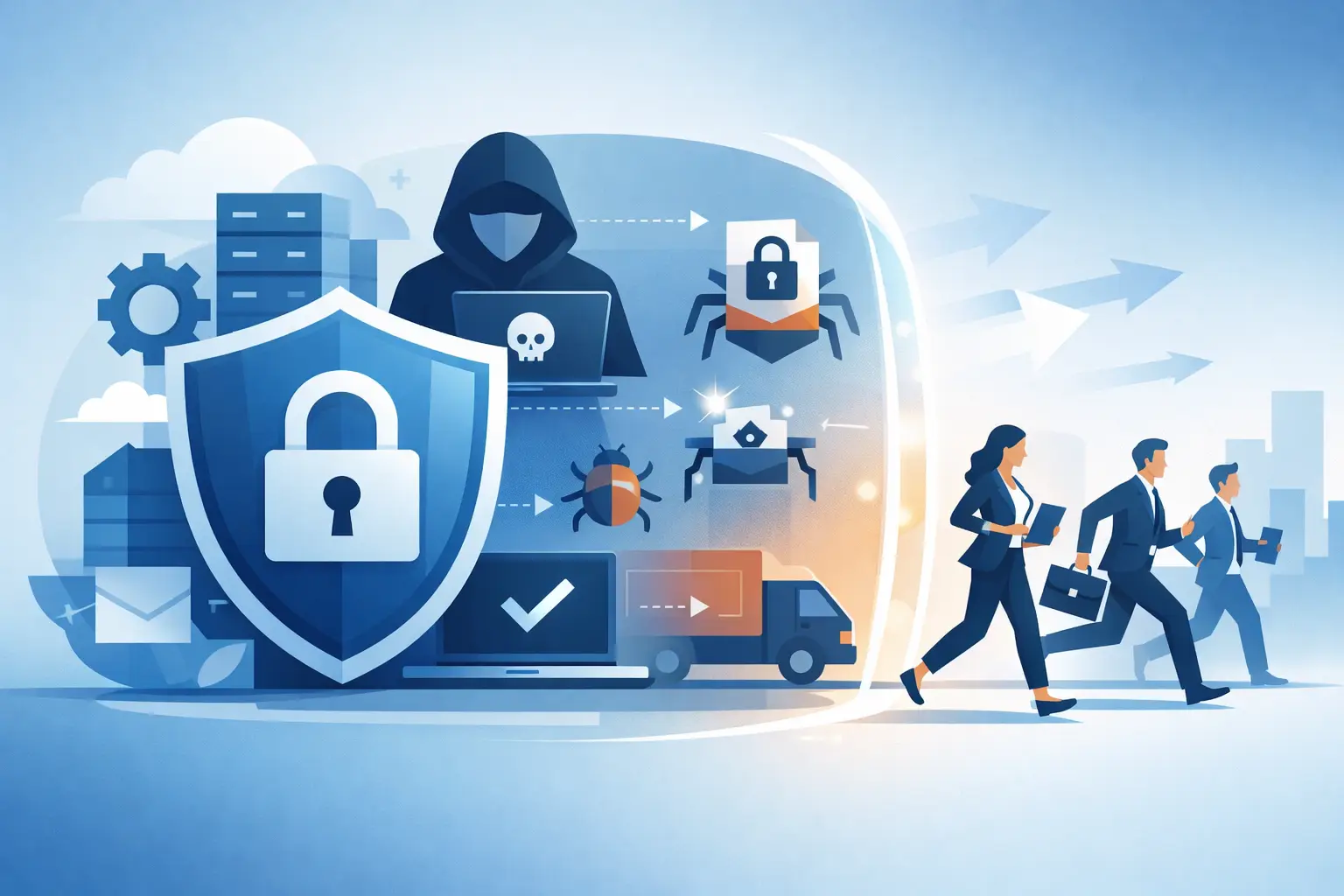
A ransomware incident rarely begins with an obvious warning. It may start with a convincing invoice, a reused password, an unpatched remote access tool, or an employee who clicks a link during a busy afternoon. By the time files become unavailable and a ransom note appears, the issue is no longer just technical. Effective ransomware protection is a business continuity strategy that protects revenue, customer trust, operations, and the ability to serve clients.
For small and mid-sized organizations, the challenge is not simply buying another security product. It is building layers of protection that work together, are actively monitored, and can support a fast recovery if an attacker gets through.
Why Ransomware Becomes an Operational Crisis
Ransomware is malicious software designed to block access to systems or data, usually through encryption, while criminals demand payment. Modern attacks frequently add another form of pressure: data theft. Before encrypting files, attackers may copy sensitive records and threaten to publish them if the organization does not pay.
That changes the stakes. A business may be unable to access its accounting platform, customer records, production files, email, phones, or line-of-business applications. Even organizations that can restore their data may face downtime, legal obligations, reputation damage, and difficult questions from customers, insurers, and leadership.
The most damaging attacks often exploit gaps between systems and responsibilities. One vendor manages email, another manages backups, an internal employee oversees network equipment, and no one has a complete view of security risk. When an incident occurs, that fragmented model can delay containment and recovery.
Ransomware Protection Starts With Prevention
Prevention cannot guarantee that an organization will never be targeted. It can, however, reduce the likelihood that an ordinary mistake becomes a company-wide outage. The goal is to make unauthorized access harder, limit the reach of an attacker, and identify suspicious activity before it spreads.
Secure identities and access first
Compromised credentials are a common path into business environments. Multi-factor authentication should protect email, remote access, cloud applications, and administrator accounts. Passwords should be unique, managed appropriately, and never shared between users.
Access should also match the person’s role. Employees need the systems and data required to do their jobs, but broad administrator privileges create unnecessary risk. If a standard user account is compromised, limited access can keep an attacker from immediately reaching servers, backups, or sensitive company data.
This is especially important for organizations with remote employees, multiple locations, field staff, or outside vendors. Each connection point must be understood, secured, and reviewed as staffing and business needs change.
Keep systems patched and visible
Attackers actively search for known weaknesses in operating systems, firewalls, applications, and remote management tools. Consistent patch management closes those openings before they can be used. Delayed updates are sometimes necessary for compatibility or operational reasons, but those exceptions should be documented, assessed, and addressed with compensating controls.
Visibility matters just as much as patching. An organization cannot protect devices it does not know about. A current inventory of workstations, servers, mobile devices, network equipment, applications, and cloud services helps IT teams identify unsupported systems and reduce shadow IT.
Protect email, endpoints, and the network together
Email remains a major delivery method for phishing and malware. Strong filtering can reduce malicious messages, but it should be paired with employee awareness training and a clear way for staff to report suspicious emails. Training should be practical rather than punitive. Employees are more likely to report a mistake quickly when they know the priority is containment, not blame.
Endpoint security tools help identify suspicious behavior on computers and servers, including unusual encryption activity, credential theft attempts, and unauthorized software. Network segmentation adds another layer by separating critical systems from general user devices. If ransomware reaches one endpoint, segmentation can prevent it from moving freely across the environment.
These controls work best when someone is accountable for monitoring alerts, reviewing risk, and responding quickly. Security technology that generates warnings without a defined response process can create false confidence.
Backups Are Your Recovery Foundation
Backups are essential, but not every backup is a ransomware recovery plan. If backup files are connected to the same environment and accessible through compromised credentials, attackers may encrypt or delete them before launching the main attack.
A dependable strategy uses multiple backup copies, stored in separate locations, with at least one protected from alteration by the production environment. Many businesses use immutable storage, offline copies, or both. The right approach depends on the amount of data, recovery objectives, compliance needs, application dependencies, and budget.
Recovery speed is equally important. Restoring a few folders is very different from rebuilding a server, reconnecting users, validating data, and bringing a critical application back online. Business leaders should know which systems must be restored first and how long each recovery stage is expected to take.
Test recovery before an emergency
A backup report stating that jobs completed successfully is useful, but it does not prove that data can be restored when needed. Recovery testing verifies that backups are usable, that applications function after restoration, and that the team understands the process.
Testing also exposes practical gaps. A company may discover that it has a copy of a database but not the configuration required to run the application, or that restoring data takes longer than its operations can tolerate. Finding those issues during a scheduled test is far less costly than finding them during an attack.
Build an Incident Response Plan People Can Use
When ransomware is suspected, the first hours matter. Employees and leaders need a concise plan that answers who to contact, who can make decisions, how systems will be isolated, and how the organization will communicate with staff, customers, vendors, and legal or insurance partners.
The plan should not be a lengthy document that sits untouched in a shared folder. It should identify decision-makers, technical contacts, outside resources, emergency communication methods, and the steps required to preserve evidence. It should also be available when normal systems are unavailable.
If suspicious encryption, ransom notes, unfamiliar administrator accounts, or unusual login activity appear, organizations should act quickly. Disconnect affected devices from the network when appropriate, avoid wiping systems before the situation is assessed, and engage qualified security professionals. Early containment can protect unaffected systems and preserve the information needed to understand what happened.
Whether to pay a ransom is a high-stakes decision involving legal, financial, operational, and ethical considerations. Payment does not guarantee that data will be returned, that stolen information will be destroyed, or that attackers will not strike again. A prepared recovery capability gives leadership more options and reduces pressure to make decisions under crisis conditions.
Assign Clear Ownership for Ransomware Protection
Cybersecurity is not a one-time project. New employees join, systems change, vendors gain access, and threats evolve. Ransomware protection requires ongoing ownership across identity management, patching, backups, endpoint security, network controls, monitoring, and recovery testing.
For organizations with internal IT teams, a co-managed approach can add specialized security tools, oversight, and response capacity without replacing internal knowledge. For businesses without dedicated technical staff, a managed technology partner can provide the structure and accountability needed to keep security work from falling behind daily operational demands.
At Plasma Networks, the focus is on bringing infrastructure, cybersecurity, connectivity, and support into a coordinated strategy so businesses can reduce blind spots and maintain operational control. The best fit depends on the organization’s systems, risk profile, regulatory responsibilities, and tolerance for downtime.
The most useful next step is not waiting for a security event to expose a weakness. Review who has access, confirm that backups can be restored, identify the systems your business cannot operate without, and make sure the right people know what to do if those systems are threatened. That preparation turns ransomware from a business-ending possibility into a risk your organization is ready to manage.


