A ransomware alert at 8:12 a.m. can derail an entire business day before your team has finished coffee. Orders stall, employees lose access, customers start calling, and leadership is forced into crisis mode. That is why cybersecurity services are no longer a niche IT purchase. For small and mid-sized businesses, they are a core operational safeguard.
The challenge is not just stopping a major breach. It is protecting day-to-day business continuity across email, endpoints, cloud platforms, networks, and user access. Most organizations are managing more systems, more vendors, and more remote connectivity than they were a few years ago. At the same time, attacks have become more automated, more targeted, and more disruptive. Businesses that once assumed they were too small to be noticed are now common targets because attackers know smaller teams often have fewer internal resources.
What cybersecurity services actually cover
Cybersecurity services are often misunderstood as a single tool or a one-time project. In practice, they are a set of ongoing protections, controls, and response capabilities designed to reduce risk across the entire business environment.
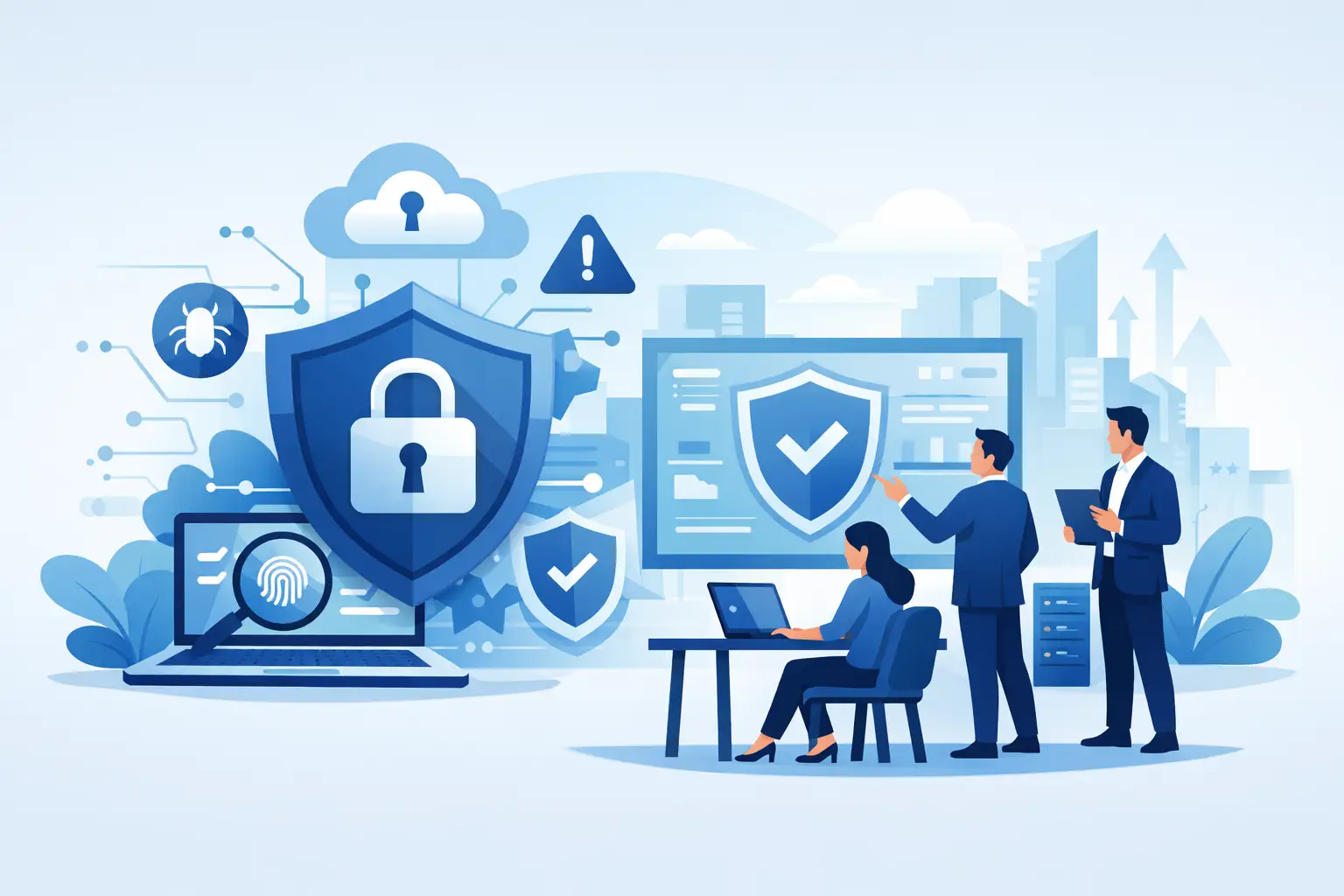
That usually starts with foundational protection. Endpoint security, firewall management, email filtering, multi-factor authentication, patching, backup oversight, and access control all play a role. On their own, each control matters. Together, they create layers that make it harder for threats to get in and easier to contain them when they do.
More mature cybersecurity services also include monitoring, detection, vulnerability management, policy guidance, user awareness training, and incident response planning. This is where businesses move from basic defense to active risk management. The goal is not simply to install software. It is to build a security posture that supports uptime, compliance, and long-term operational stability.
Why cybersecurity services matter to business operations
Security conversations often focus on worst-case scenarios, but the day-to-day business impact is just as important. A compromised email account can disrupt vendor payments. An unpatched workstation can create a path into shared files. Poorly managed user permissions can expose sensitive HR or financial data. These issues are not theoretical. They affect cash flow, productivity, reputation, and customer trust.
For many organizations, the real value of cybersecurity services is that they reduce operational friction. Teams are not scrambling to guess whether a suspicious login matters. Leadership is not relying on outdated antivirus alone. Internal staff do not have to carry the full burden of monitoring threats, reviewing alerts, and coordinating responses across multiple systems.
This is especially important for businesses with lean IT teams or no dedicated security staff. In those environments, cybersecurity services provide structure and accountability. They help ensure that critical protections are in place, monitored consistently, and updated as threats evolve.
The most common gaps businesses overlook
Many companies assume they are adequately protected because they have a firewall, antivirus, and cloud software. That is a start, but it is rarely enough.
One of the most common gaps is identity security. If user accounts are not protected with strong authentication, role-based access, and regular review, attackers may not need to break in through the network. They can log in through the front door using stolen credentials.
Another frequent issue is visibility. Businesses often have security tools in place, but no one is watching them closely enough. Alerts go unread. Software falls out of date. Suspicious activity is noticed only after a user reports a problem. Without monitoring and follow-through, a security stack can look better on paper than it performs in reality.
Backup strategy is another area where assumptions create risk. Having backups is not the same as having recoverable backups. If backups are not tested, segmented, and aligned to recovery priorities, they may not provide the protection the business expects during a ransomware event or major outage.
Then there is the human factor. Employees remain one of the most common entry points for phishing, credential theft, and accidental data exposure. Effective cybersecurity services address this without treating users as the problem. Good security programs make safe behavior easier and more consistent.
How to evaluate cybersecurity services for your business
The right approach depends on your environment, industry, and risk tolerance. A professional services firm with a small internal team will have different needs than a manufacturer with multiple sites, physical security requirements, and complex vendor access. There is no single package that fits every organization.
That said, strong cybersecurity services should begin with a clear understanding of your current environment. What systems are critical? Where is sensitive data stored? Who has access to what? Which compliance requirements apply? What would downtime cost the business in practical terms?
From there, the service model should align protection with business priorities. Some companies need fully managed security support because they lack internal resources. Others need a co-managed model that extends the capabilities of their IT staff. The key is not choosing the biggest stack of tools. It is choosing a service partner that can translate technical controls into business outcomes.
That means asking practical questions. Who is monitoring alerts, and when? How are vulnerabilities prioritized? What happens during an incident? How are backups verified? How are users onboarded and offboarded? How often are security policies reviewed? If the answers are vague, the service may be incomplete.
What effective cybersecurity services should deliver
The best cybersecurity services do more than reduce risk in theory. They produce measurable operational improvements.
First, they improve resilience. When systems are patched, monitored, backed up, and access-controlled properly, routine threats are less likely to turn into business-wide disruptions. Problems may still occur, but they are easier to isolate and recover from.
Second, they improve response time. A business should not be figuring out roles and next steps in the middle of an incident. Effective services establish escalation paths, visibility, and ownership before there is a problem.
Third, they support compliance and client expectations. Many businesses now face security questionnaires, insurance requirements, contractual obligations, or industry regulations that demand documented controls. Cybersecurity services can help organizations meet those expectations without building everything internally.
Fourth, they reduce vendor sprawl. Security often becomes fragmented across different tools, consultants, and providers. A unified technology partner can simplify that landscape by bringing infrastructure, support, and protection into a more coordinated model. For companies that want fewer handoffs and clearer accountability, that matters.
Cybersecurity services are not one-size-fits-all
There is a trade-off between cost, complexity, and coverage. Some businesses overbuy tools they do not have the staff to manage. Others underinvest and assume cyber insurance will fill the gap. Neither approach is ideal.
A practical security program should match the pace and reality of the business. If you are opening new sites, adding remote employees, moving workloads to the cloud, or supporting specialized operational systems, your cybersecurity services need to adapt with you. Static protection does not hold up well in changing environments.
It also helps to work with a partner that understands security as part of the wider technology picture. A network issue, a permissions issue, a backup issue, and a security issue are often connected. Treating them as separate problems can slow response and create blind spots. Providers such as Plasma Networks are often valuable in this context because they can support the broader infrastructure and security relationship together, rather than pushing businesses to manage disconnected vendors.
Choosing a partner, not just a provider
When business leaders evaluate cybersecurity services, technical capability matters, but so does accountability. You want a partner that can explain risk clearly, respond quickly, and make decisions with your operations in mind. The right provider should be comfortable talking to executives about business impact and to technical teams about implementation details.
That balance is important because security is not only about prevention. It is about continuity, recovery, and confidence. A good partner helps you make smart decisions before an incident, not just after one.
For growing businesses, that may be the most important point. Security should not be an obstacle to growth. It should be part of the foundation that allows you to scale systems, support users, meet client expectations, and keep operations moving without unnecessary disruption.
If your business is still relying on a patchwork of tools, occasional checkups, or informal processes, this is a good time to reassess. The right cybersecurity services do not just protect data. They protect the ability to do business tomorrow morning.