
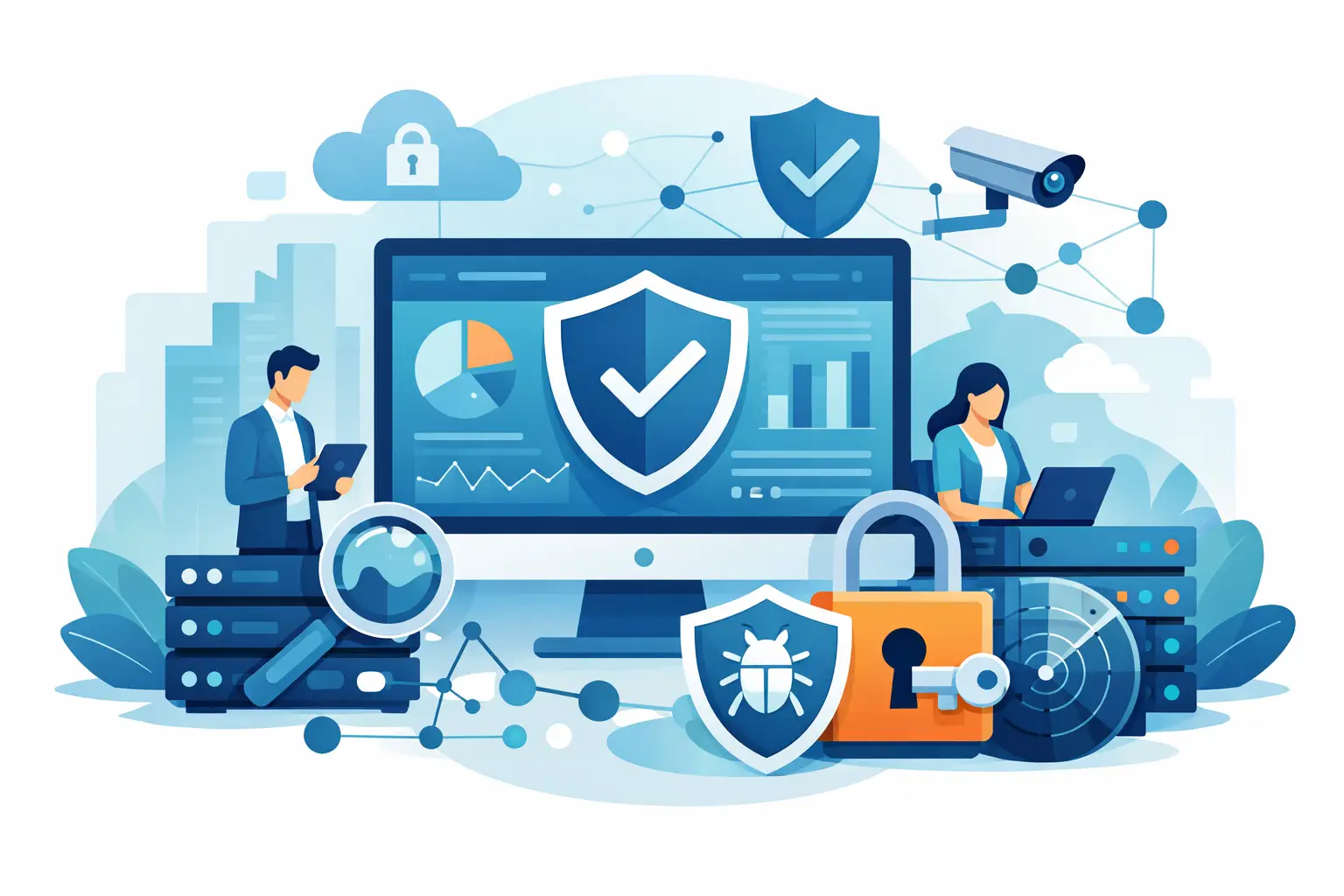
A suspicious sign-in at 2:13 a.m. may look insignificant on its own. So might a firewall alert, a failed VPN login, or an unexpected change to a user account. Together, those events can reveal an active attack. That is the practical answer to what is SIEM: it is a security platform that collects and analyzes activity across your technology environment so threats are easier to see, investigate, and contain.
For small and mid-sized businesses, the value is not simply having more alerts. It is gaining useful visibility across systems that otherwise operate independently. A SIEM can help an IT team or managed security partner identify meaningful risk sooner, protect business data, and maintain the documentation needed for security reviews or compliance requirements.
What Is SIEM and What Does It Stand For?
SIEM stands for Security Information and Event Management. It combines two related security functions:
Security information management focuses on collecting, storing, and reporting on security data over time. Security event management focuses on monitoring events as they occur and alerting teams to possible threats.
A SIEM brings these functions into one central platform. It gathers logs and event data from sources such as firewalls, servers, workstations, cloud applications, email security tools, identity platforms, VPNs, and network equipment. It then normalizes that data so activity from different systems can be reviewed in a consistent format.
The platform applies correlation rules, behavioral analysis, and threat intelligence to look for patterns. For example, a single unsuccessful login may be routine. Hundreds of failed login attempts followed by a successful remote connection from an unfamiliar location deserve immediate attention. A SIEM is designed to connect those signals rather than treat them as unrelated entries in separate logs.
Why Businesses Need Centralized Security Visibility
Most organizations already generate large volumes of security data. The problem is that the data is often scattered across several dashboards, devices, and cloud portals. During a security incident, that fragmentation can delay the response when every minute matters.
A SIEM provides a central record of what happened, where it happened, and when. That matters after a suspected phishing incident, ransomware alert, compromised account, or unauthorized network connection. Instead of beginning with guesswork, the team can review a timeline of relevant events and determine the scope of the issue.
Centralized visibility also supports operational accountability. Business leaders need confidence that security controls are working, not just installed. A properly managed SIEM can show whether critical systems are reporting, whether high-risk alerts are being investigated, and whether recurring issues need remediation.
This is especially valuable for organizations with lean internal IT teams. A company may have capable staff managing users, devices, applications, and daily support, but continuous security monitoring requires a different level of attention. Security events do not wait for business hours, and the most useful alerts often require context before someone can decide whether they are urgent.
How a SIEM Works in Practice
A SIEM generally follows a repeatable process: collect data, organize it, analyze it, alert the right people, and preserve it for investigation or reporting.
First, the platform receives logs and telemetry from connected systems. Examples include authentication attempts, endpoint detections, firewall blocks, administrative changes, file access activity, and cloud application events. The quality of this step matters. If critical systems are not sending data to the SIEM, the organization has blind spots.
Next, the SIEM normalizes and enriches the information. A login event from a cloud platform and a login event from a local server may use different formats, but the SIEM can make them easier to compare. It may also add context from threat intelligence feeds, asset inventories, or user directories.
Then the system analyzes activity against defined rules and detection logic. A rule might identify repeated failed logins, a disabled security tool, a new administrator account, or data leaving the network in unusual volumes. More advanced platforms can also identify behavior that differs from established patterns, though behavioral detection still requires careful tuning.
When a rule is triggered, the SIEM creates an alert. That alert should be reviewed by someone who can separate harmless activity from a genuine security concern. In many environments, this is where a managed security provider or security operations team adds significant value. Alert volume alone does not improve security. Accurate triage and timely action do.
What a SIEM Can Help Detect
A SIEM is not limited to one type of threat. Its value comes from correlating signals across the environment. Common use cases include detecting compromised credentials, suspicious remote access, privilege escalation, malware activity, configuration changes, and possible data exfiltration.
Consider a common business email compromise scenario. An employee receives a convincing phishing message and enters their credentials on a fraudulent page. The attacker logs into the email account, creates a forwarding rule, and attempts to access financial information. An email platform may identify one part of that activity, while an identity platform records another. A SIEM can bring those events together and alert the team to the larger pattern.
It can also support faster ransomware response. If endpoint protection detects suspicious encryption activity while the firewall sees unusual connections and a file server records mass file changes, the SIEM can help investigators understand whether the events are connected. That visibility can accelerate containment decisions, such as isolating a device, disabling an account, or blocking a network connection.
SIEM Is Powerful, but It Is Not a Complete Security Program
A SIEM is an important layer of security, not a replacement for core controls. It cannot compensate for missing multi-factor authentication, unpatched systems, weak passwords, poor backup practices, or employees who have not received phishing awareness training.
It also does not eliminate the need for human judgment. SIEM platforms can generate false positives, particularly when rules are deployed without tuning. If a team receives too many low-value alerts, critical issues can be overlooked. The right approach balances broad visibility with detection rules that reflect the organization’s systems, users, risks, and normal operating patterns.
There is also a cost and management consideration. SIEM pricing is often tied to data volume, and logging everything without a plan can become expensive. Businesses should prioritize sources that provide real security value, such as identity systems, endpoints, firewalls, email platforms, servers, and critical cloud applications. Log retention requirements should be based on risk, operational needs, and any applicable compliance obligations.
SIEM vs. SOC, MDR, and EDR
These terms are often used together, but they serve different purposes.
A SIEM is the technology platform that collects and analyzes security events. EDR, or endpoint detection and response, focuses specifically on workstations and servers. It can detect and respond to suspicious activity on those endpoints, such as malware execution or unauthorized processes.
A SOC, or security operations center, is the people and process function responsible for monitoring, investigating, and responding to security alerts. An MDR service, or managed detection and response, provides that security monitoring and response capability through an external provider, typically using tools such as EDR and SIEM.
The best fit depends on internal resources. A larger organization may operate its own SIEM and SOC. A growing business may benefit more from a managed approach that combines the right technology with experienced analysts who can monitor alerts, investigate suspicious activity, and escalate issues with clear recommendations.
Choosing the Right SIEM Approach
Before selecting a SIEM, start with the business outcome. Are you trying to meet compliance requirements, improve incident response, protect a hybrid workforce, gain visibility into cloud systems, or reduce the burden on internal IT? The answer should shape the design.
A practical SIEM deployment begins with a defined scope. Connect the systems that carry the greatest operational and security risk, then confirm that logs are complete and useful. Establish alert priorities, response procedures, and clear ownership for investigations. A high-severity alert without an assigned response path is only a notification, not a security capability.
Organizations should also evaluate whether they have the capacity to manage the platform day to day. This includes tuning detection rules, reviewing alerts, maintaining integrations, retaining logs, and documenting incidents. For many businesses, the technology is only half the equation. The other half is consistent oversight from people who understand both the security tools and the business environment.
At Plasma Networks, security monitoring is approached as part of a broader effort to protect uptime, data, users, and critical operations. The goal is not to create another dashboard for your team to watch. It is to establish visibility and response processes that support informed decisions when a security event occurs.
A SIEM delivers its greatest value before an incident becomes a business disruption. When the right data, detection logic, and response ownership are already in place, your organization is better positioned to act with speed and confidence when something does not look right.


